
Powerful data privacy and enhanced productivity for a leading KPO service provider
One of India’s largest BPO/KPO organizations needed to ensure the security of the highly sensitive healthcare data under their management.
Give your customers a fast, secure way to onboard themselves, without losing control over who gets access to what. Scale customer sign‑ups, keep access convenient, and protect accounts with guided registration flows, social login options, and strong authentication.
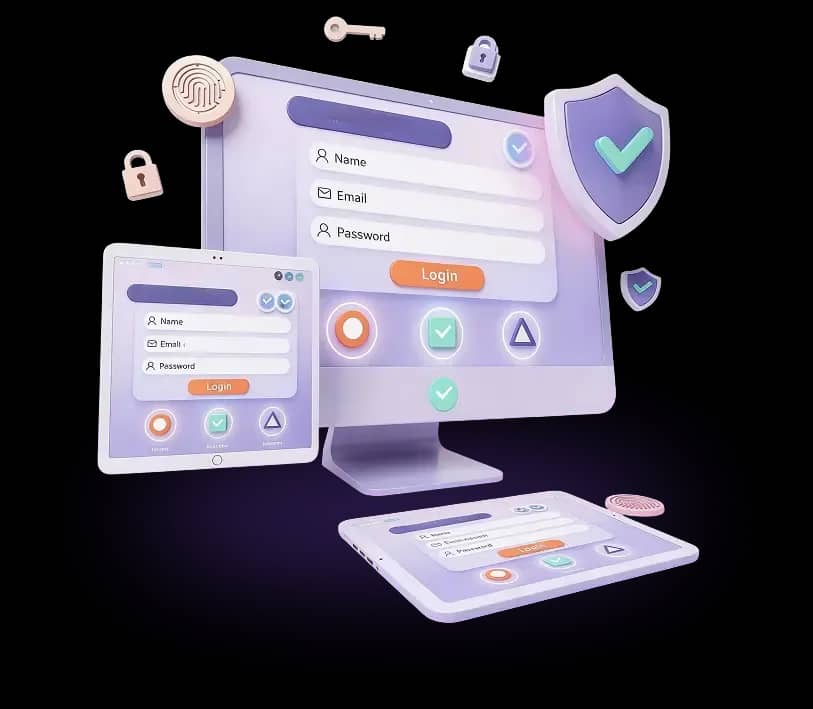
Secure customer self‑registration makes it possible for you to allow new customers to create their own accounts while still enforcing your security policies, verification steps, and access rules. This enables you to grow faster without a manual customer registration process that would drain your organization’s resources, while at the same time ensuring that you don’t open the door to fake, weak, or poorly protected identities.
Design and automate customer onboarding journeys so every new user is verified, registered, and granted the appropriate access through a seamless, low-friction self-service process. Automated workflows reduce manual intervention, speed up activation, and improve the user experience, while ensuring compliance with security policies. This approach enables faster customer engagement, consistent identity verification, and scalable onboarding across digital platforms.
Enable your customers to sign up and log in using their existing social accounts across Google, Meta, LinkedIn, and X. Users spend less time creating and managing credentials and spend more time engaging with your platforms. This reduces password fatigue, speeds up onboarding, and lowers sign-up friction. You benefit from improved conversions, smoother user journeys, and stronger authentication reliability.
Protect customer accounts by enforcing multi-factor authentication (MFA) as a standard security layer. Automatically trigger a step-up authentication process when login risk scores rise due to the use of unusual devices, unfamiliar locations, or suspicious behavior patterns. This adaptive authentication approach strengthens account protection, reduces fraud risk, improves trust, and ensures that legitimate users experience minimal friction while maintaining strong, context-based security controls.